
Key takeaways
- Cement-based grout usually needs resealing every 1 to 3 years; showers and kitchens often sooner.
- Epoxy grout generally does not need sealing at all.
- The water-drop test tells you when to reseal: beads mean working, darkening means reseal.
- Always clean before sealing. Sealer locks in whatever dirt and moisture are already in the grout.
- At The Dirt Army, sealing is included with every tile and grout cleaning ($175 to $350 per standard room).
How often should you seal grout? Typical timelines by room
There is no universal schedule, and sealer brands disagree. This is a realistic framework for most homes:
| Area | Typical reseal timing | Why |
|---|---|---|
| Cement-based grout (general) | About every 1 to 3 years | The common guide range; the actual time depends on the sealer product |
| Shower walls, floors, tub surrounds | Often every 6 to 12 months | Constant water, soap, and cleaning wear sealer faster |
| Kitchen floors and entryways | Shorter end of 1 to 3 years | Foot traffic, spills, and frequent mopping |
| Low-traffic rooms | Longer end; some sealers rate 3 to 5 years | Less wear and less cleaning |
| Epoxy grout | Usually never | It resists absorption on its own |
Two things matter more than any number: the sealer product (check its label, ratings vary widely) and your cleaning habits. Harsh cleaners can strip sealer faster than foot traffic. That is why the test below beats the calendar.
Why grout needs sealing in the first place
Cement-based grout is porous. Left unsealed, it absorbs water, spills, soap residue, and dirt. Sealer fills those pores or coats the surface so liquids stay on top, where you can wipe them away. A working sealer:
- Resists stains from food, grease, and mop water.
- Slows moisture absorption, which matters in showers where mildew thrives.
- Makes routine cleaning easier.
Sealer is not a force field. It slows absorption but does not make grout waterproof or stain-proof, and it wears away with traffic, cleaning, and time.
Does all grout need sealing?
No. It depends on the grout type:
- Sanded cement-based grout: generally needs sealing.
- Unsanded cement-based grout: generally needs sealing.
- Epoxy grout: generally does not need sealing.
- Polymer-modified grout: depends on the product; follow the manufacturer’s instructions.
Not sure what you have? Check your installation records or ask your builder or tile installer. A professional can usually tell during an inspection. Natural stone tile is porous too and often needs its own sealing; see our natural stone restoration services if you have marble or travertine.
Murrieta factors that can affect your grout
Local conditions play a role. Many Murrieta homes deal with hard water, and mineral deposits build up on shower tile and grout, with soap scum adding to it. Scrubbing those deposits off with strong acidic cleaners can also wear down sealer, so showers here often need resealing sooner than other rooms. Water hardness varies by neighborhood and source; your water provider’s annual report shows yours.
The water-drop test: is your grout sealer still working?
This is the simplest way to check your sealer. It takes about five minutes and needs only a spoon or dropper, water, a dry cloth, and a timer.
1. Clean and dry the grout
Wipe away dirt and let the area dry completely. Wet or dirty grout gives false readings.
2. Pick 3 or 4 spots
Test a high-traffic area, a spot near the shower or sink, and a low-traffic corner.
3. Add a few drops
Use a spoon or dropper to place a few drops of water directly on the grout line.
4. Wait about 5 minutes
Some guides use 1 to 2 minutes; check your sealer label, or use 5 minutes as a safe default.
What the results mean
| What you see | What it means | What to do |
|---|---|---|
| Water beads and stays on top | Sealer is working | Do not reseal. Retest in 6 to 12 months. |
| Water slowly soaks in; grout starts to darken | Sealer is thinning | Plan to reseal soon. |
| Water soaks in fast; grout darkens quickly | Sealer is mostly gone | Clean, then reseal. |
| Results differ by spot | Uneven wear | Reseal failing areas, or the whole floor for an even finish. |
- Test several spots, because wear is never even.
- Some penetrating sealers do not make water bead. Darkening is the real clue.
- Epoxy grout barely absorbs water either way, so the test tells you less.
- If water still beads, do not reseal. New sealer will not bond well over a working one.
- Retest every 6 to 12 months, especially in showers.
Save this: beads = working. Darkens = reseal. Test clean, dry grout in several spots and wait about five minutes.
Grout failed the water test?
We deep-clean and reseal tile and grout across Murrieta and nearby cities.
What to do if your grout fails the test
Do not just add sealer on top. The order matters:
- Deep clean first. Sealing over dirt, soap residue, or moisture traps it in.
- Let it dry completely, as the sealer instructions direct.
- Apply sealer evenly and wipe the excess off the tile surface.
- Allow the full cure time on the label before using the area.
- Retest once cured. If water still soaks in, another coat may be needed.
The cleaning step is where most DIY attempts fail. Stained or deeply soiled grout usually takes more than a quick scrub, which is why sealing is the last step of our professional tile and grout cleaning in Murrieta.
Common grout sealing mistakes
- Sealing dirty or damp grout, which traps moisture and grime.
- Sealing too soon after regrouting, before the new grout has cured.
- Sealing when it is not needed, such as over a working sealer or on epoxy grout.
- Applying too much, which leaves a haze or sticky film on the tile.
- Using the wrong product for your grout or tile.
- Cleaning with harsh products that strip sealer quickly.
- Confusing sealing with grout color sealing, which is a different service.
Grout sealing vs grout color sealing
Both protect grout, but they solve different problems.
Clear grout sealing
- Protects grout without changing its look
- Best for grout that is clean and evenly colored
- Needs resealing every 1 to 3 years
- Included with our tile and grout cleaning
Grout color sealing
- Adds color for one even, uniform finish
- Best for grout that stays stained or faded after cleaning
- Also helps resist future stains
- A separate service with its own quote
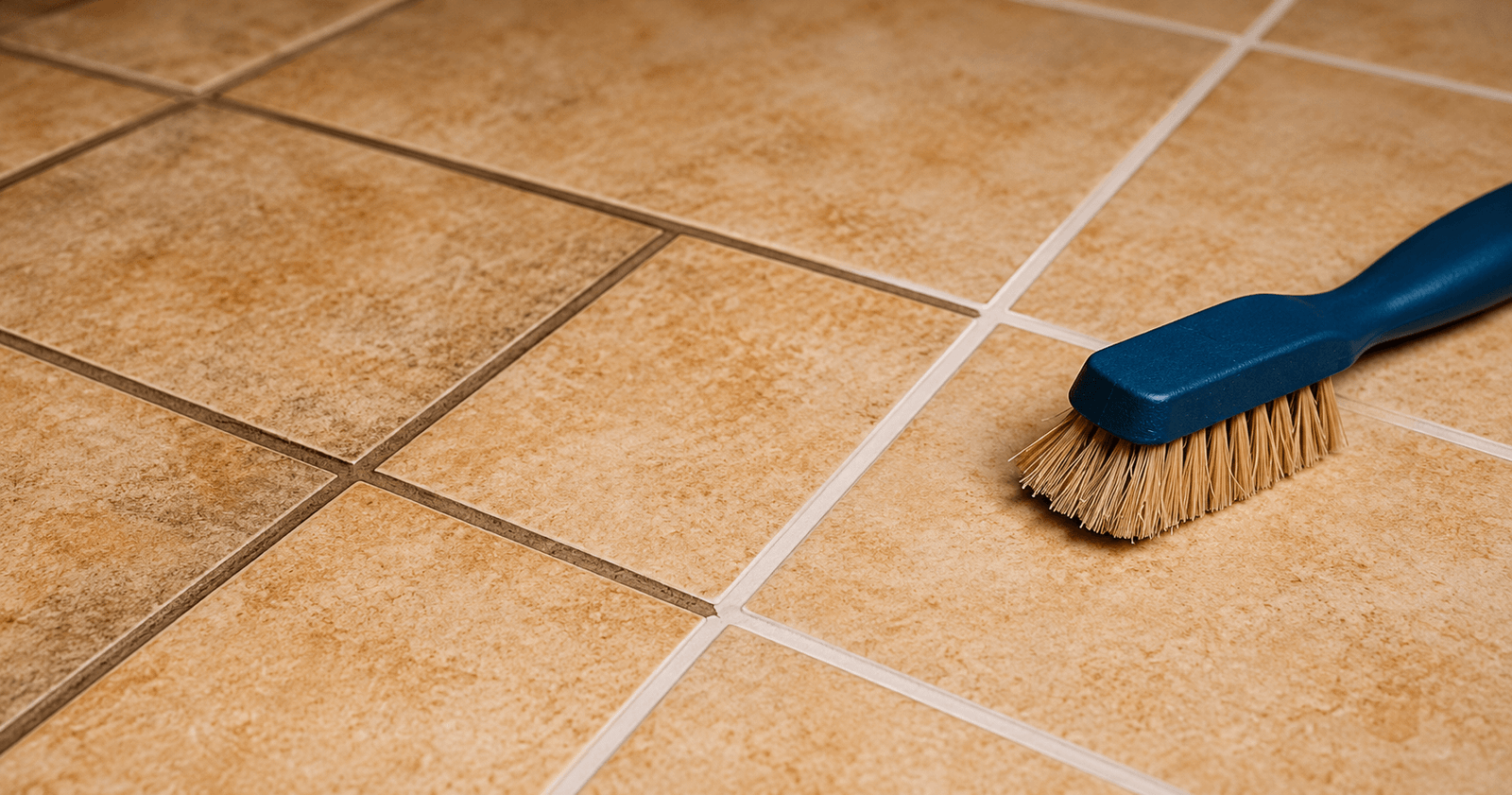
Learn more about grout color sealing in Murrieta.
How The Dirt Army handles grout sealing
At The Dirt Army, sealing is the final step of our 7-step tile and grout cleaning process, and it is included at no extra charge. Brandon inspects your tile before quoting, because natural stone, heavy staining, or pet damage can change the approach. After the grout is deep cleaned with high-pressure steam and dried with industrial fans, a sealer goes on to protect it and slow how fast it gets dirty again. Depending on traffic and the sealer, it typically lasts 1 to 3 years.
Customers rate The Dirt Army 4.9 stars on Google. We serve homes in Murrieta and nearby cities:
7-point grout sealing checklist
- Know your grout type. Epoxy usually needs no sealing; cement-based does.
- Run the water test on clean, dry grout in several spots.
- Read the result: beads mean working, darkening means reseal.
- Start clean. Deep clean before sealing.
- Let grout dry fully, and give new grout its full cure time.
- Follow the sealer label for application, coats, and cure time.
- Set a retest reminder for 6 to 12 months, sooner for showers.
Frequently asked questions
How often should you seal grout?
Most cement-based grout needs resealing about every 1 to 3 years. Showers and high-traffic kitchens may need it sooner, and low-traffic areas can last longer. The sealer product matters, so check its label.
How do I know if my grout sealer is still working?
Do the water-drop test. Put a few drops of water on clean, dry grout and wait a few minutes. If the water beads, the sealer is working. If it soaks in and darkens the grout, it is time to reseal.
Does grout always need to be sealed?
Not always. Cement-based grout generally does, epoxy grout generally does not, and polymer-modified grout depends on the product.
Can you seal grout too often?
Yes. Sealing over a sealer that still works is usually pointless and can leave a haze or bond poorly. If water still beads, wait.
Do I need to clean grout before sealing?
Yes. Sealing over dirt, soap residue, or moisture traps it in the grout. Clean and dry the grout first.
How long should grout dry before and after sealing?
Follow the grout and sealer manufacturers’ directions. New grout needs time to cure before sealing, and sealed grout needs time to cure before regular use.
What is the difference between grout sealing and grout color sealing?
Clear sealing protects grout without changing its look much. Grout color sealing adds color for a uniform finish while also helping resist stains.
Is grout sealing included with professional cleaning in Murrieta?
At The Dirt Army, yes. Sealing is the final step of our standard tile and grout cleaning, which runs $175 to $350 per standard-size room in Murrieta and nearby cities.
Ready to reseal your grout?
If your water-drop test shows worn sealer, or your grout looks dull, stained, or uneven, we can help. The Dirt Army provides tile and grout cleaning with sealing, plus grout color sealing, in Murrieta, Temecula, Menifee, and nearby areas. Request a quote or call (951) 572-5228 and tell us what the water test showed.